
Supporting Forgotten Australians
Healing through art, stories, and advocacy
The Adult Specialist Support Service offers specialised trauma-informed counselling and support services for Tasmanians who were placed in institutional care such as orphanages, foster care and children’s homes in Australia in the last century who may be known as Forgotten Australians, Former Child Migrants, Care Leavers and Stolen Generation. Specialised trauma-informed counselling and support is also available for people who were impacted by forced adoption practices during this time.
These services are delivered statewide with individual sessions as well as peer support groups in the South and North-West. Projects and services are guided by the RA Tas Reference Group, which is made up of individuals with lived experience who want to advocate for change.
Forgotten Australians who accessed our services raised concerns that their personal stories have not been documented or recorded. With many of these clients reaching the later stages of life, there was a real worry that if proactive measures were not taken, valuable information and reflections on their experiences in institutional “care” would be lost for future generations.
Forgotten Australians who accessed our services raised concerns that their personal stories have not been documented or recorded.
Preserving and recording their stories is crucial for healing and processing past trauma. It also offers an important opportunity for those who were silenced and doubted for years to have their voices heard.
Preserving and recording their stories is crucial for healing and processing past trauma.
With this in mind, the Adult Specialist Support Service team worked with the Forgotten Australians on several different projects to make sure their voices were heard:
Art Therapy
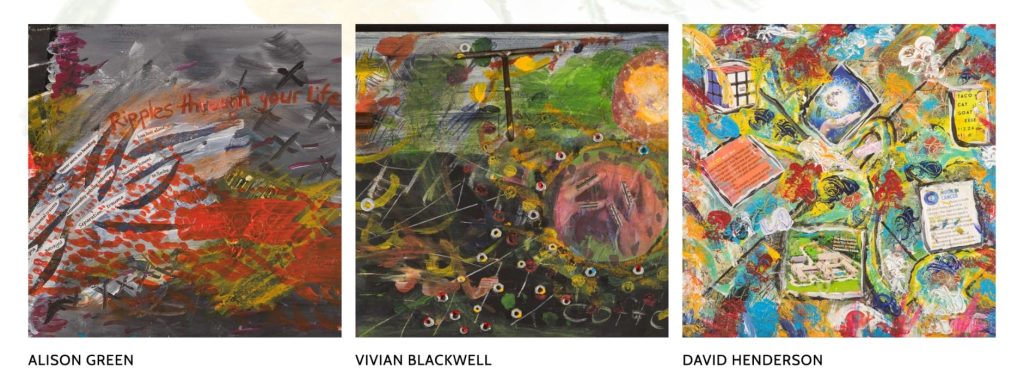
Hosted at the Moonah Arts Centre, RA Tas held a 6-week trauma-focused Art Therapy Project inspired by Eye Movement Desensitization and Reprocessing principles led by a qualified art therapy counsellor at RA Tas. During this time, Forgotten Australians had the opportunity to explore their memories, emotions, and individual stories through abstract art expression. The outcome was 12 remarkable art pieces, each accompanied by a narrative from the respective artist. This project brought together Forgotten Australians and people impacted by forced adoptions, with many forming meaningful connections through the group.
…Forgotten Australians had the opportunity to explore their memories, emotions, and individual stories through abstract art expression.
An exhibition was held in September at the Moonah Arts Centre to showcase these pieces and share these stories.

Voices of Forgotten Australians
In June 2022, six Forgotten Australians shared their stories with a videographer with the aim of showcasing their experiences during institutional care and the resulting impact on their lives.
Some of the Forgotten Australians saw the videos as a platform to educate stakeholders and create change. For others, it was a way of understanding their past and taking control of their stories.
By distributing these stories, the hope is that Forgotten Australians will feel seen, cared for, and less forgotten, with increased awareness and sensitivity.
A video launch took place in February this year, which was a great way for the Forgotten Australians to tell their stories and advocate for change. Attendees included media, politicians, stakeholders, RA Tas staff and Forgotten Australians’ loved ones.
The videos can be viewed here.
Forgotten Australians Online Portal
The Adult Specialist Support Services team have worked hard with the Reference Group to create a website that serves as a platform for storing and sharing all the stories and artwork of people with lived experience, and to share factual information about this dark period in Australia’s history. This initiative offers them a public space to showcase their narratives, and a place where they can continue to add content that helps them be seen and heard.
Our practitioner reported that one of the participants provided feedback that she has a sense of peace about her past that she didn’t have before. She has also said that her adult children didn’t really know about her past beyond a rough outline, and that since they have watched her film together, she feels that they now know who she is in a way that wasn’t possible before.
In addition, another participant has told our practitioners that he feels important, which isn’t the way that he has felt about himself before.
